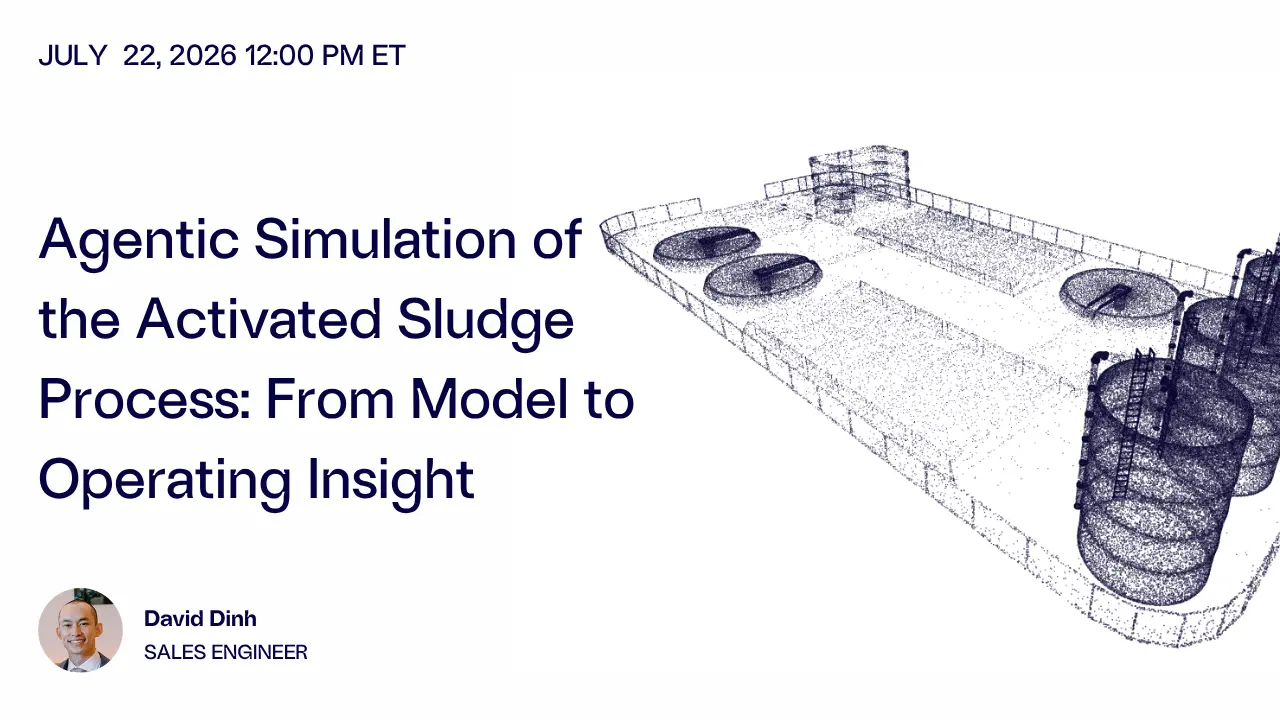
Wastewater treatment facilities are highly complex biological and chemical ecosystems where engineers must balance strict regulatory requirements against massive energy demands. The industry standard framework for evaluating these systems is the Activated Sludge Process (ASP)—specifically the globally recognized Benchmark Simulation Model No. 1 (BSM1)—which models water flowing through a series of biological reactors and a secondary clarifier to remove organic carbon and nitrogen.
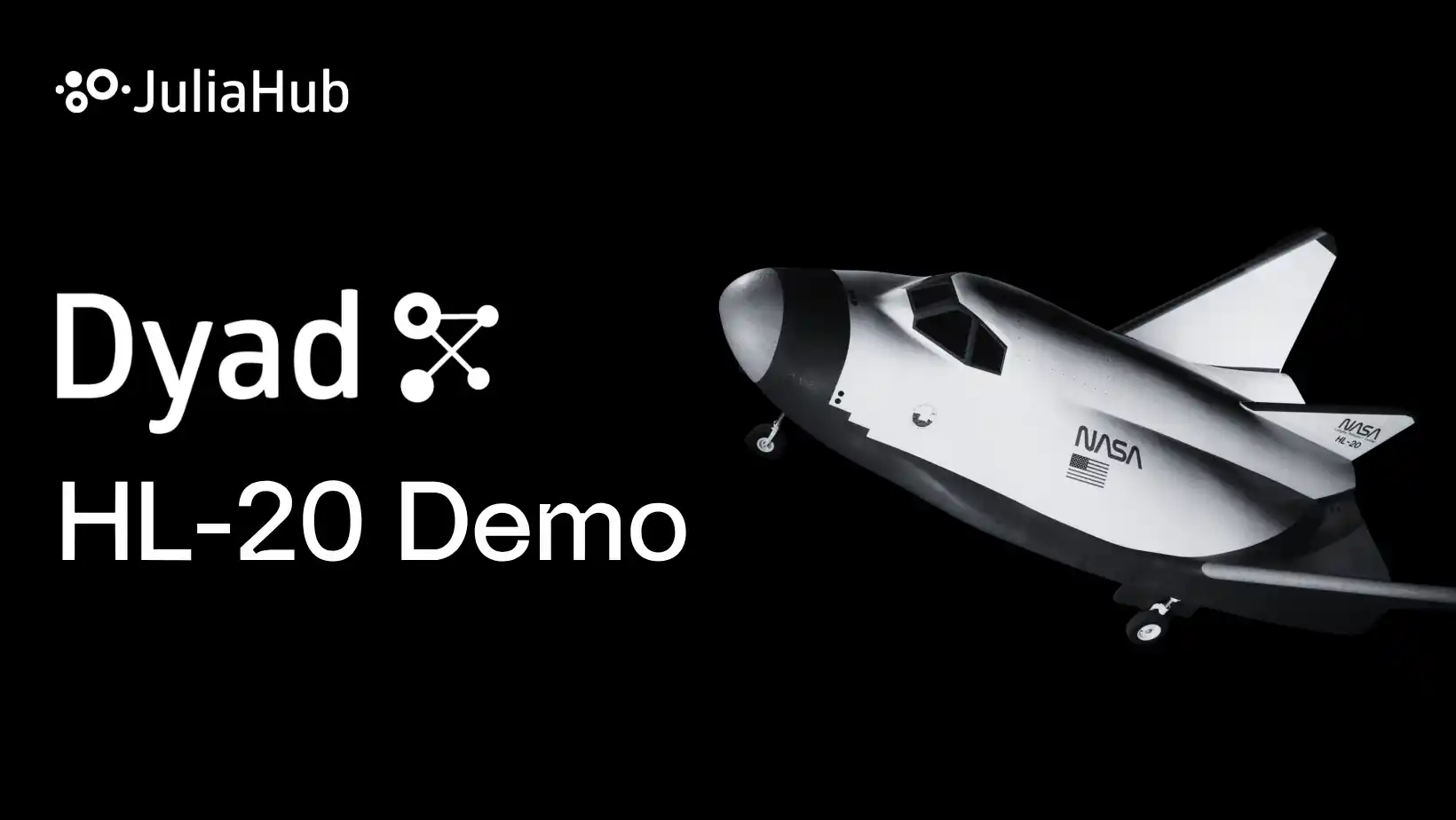
In this video, we demonstrate how a multi-tank wastewater treatment plant is implemented and optimized within Dyad. Rather than navigating dense codebase files manually, we deploy the Dyad Agent to read project files, interpret engineer comments, understand the internal biochemistry, and summarize the layout—including its two anoxic tanks, three aerated tanks, blowers, and feedback control loops.
Watch a live workflow as the agent autonomously executes a closed-loop 24-hour simulation (SimBenchPlants) to generate baseline effluent chemical oxygen demand (COD) and blower flow rate plots. Then, see the agent refactor the physical model architecture to expose the Tank 5 dissolved oxygen setpoint as a top-level parameter, enabling an automated parameter sweep that isolates an optimal, energy-efficient operating region without sacrificing water quality.