Webinar

Dyad AI Modeling Challenge: Modeling a Satellite Swarm-Part 2

Webinar

Dyad AI Modeling Challenge: Modeling a Satellite Swarm-Part 2

Event Date & Time

EDT

Speakers

Share

Event Date & Time

EDT

Speakers

Share

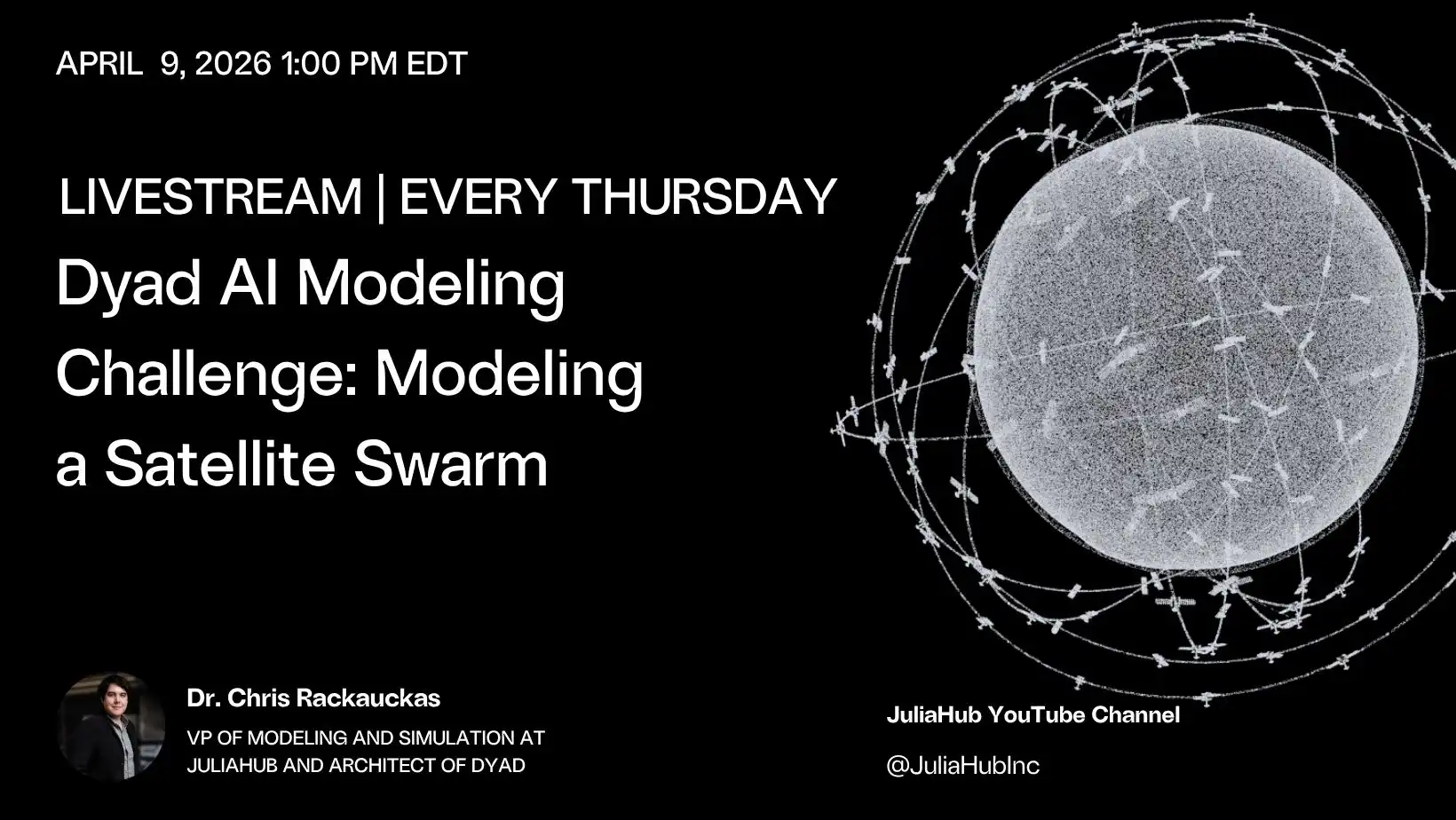
This Week’s Challenge: Modeling a Satellite Swarm

This session focuses on the challenge of building and exploring a satellite swarm model.

We’ll work through how to represent a growing network of satellites, test different ways to structure the system, and handle coordinate logic in a way that stays robust as models become more complex.

What We’ll Model

  • Inter-satellite communication at larger scale

  • Different system architectures for the overall model

  • Coordinate system handling using path variables

Why Attend

See a real modeling problem worked through live. Learn how Dyad can support:

  • reasoning through complex system behavior

  • accelerating model and simulation setup

  • exploring alternative architectures faster

  • improving decision-making through clearer technical workflows

What to Expect

This is not a polished demo. It’s a live working session.

We’ll take a real challenge, explore the problem in real time, and show how Dyad’s agentic AI can help move from complexity to a workable model faster.

Save Your Spot

Join the session here and see how live modeling with Dyad can help you build faster, reason better, and tackle more complex systems with confidence.

Speakers

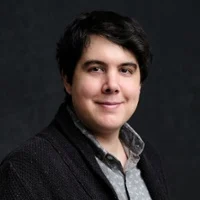
Dr. Chris Rackauckas is the VP of Modeling and Simulation at JuliaHub, the Director of Scientific Research at Pumas-AI, Co-PI of the Julia Lab at MIT, and the lead developer of the SciML Open Source Software Organization. He is the lead developer of the Pumas project and has received a top presentation award at every ACoP in the last 3 years for improving methods for uncertainty quantification, automated GPU acceleration of nonlinear mixed effects modeling (NLME), and machine learning assisted construction of NLME models with DeepNLME. For these achievements, Chris received the Emerging Scientist award from ISoP.

Speakers

Dr. Chris Rackauckas is the VP of Modeling and Simulation at JuliaHub, the Director of Scientific Research at Pumas-AI, Co-PI of the Julia Lab at MIT, and the lead developer of the SciML Open Source Software Organization. He is the lead developer of the Pumas project and has received a top presentation award at every ACoP in the last 3 years for improving methods for uncertainty quantification, automated GPU acceleration of nonlinear mixed effects modeling (NLME), and machine learning assisted construction of NLME models with DeepNLME. For these achievements, Chris received the Emerging Scientist award from ISoP.

Speakers

Dr. Chris Rackauckas is the VP of Modeling and Simulation at JuliaHub, the Director of Scientific Research at Pumas-AI, Co-PI of the Julia Lab at MIT, and the lead developer of the SciML Open Source Software Organization. He is the lead developer of the Pumas project and has received a top presentation award at every ACoP in the last 3 years for improving methods for uncertainty quantification, automated GPU acceleration of nonlinear mixed effects modeling (NLME), and machine learning assisted construction of NLME models with DeepNLME. For these achievements, Chris received the Emerging Scientist award from ISoP.

/

/

Dyad AI Modeling Challenge: Modeling a Satellite Swarm-Part 2