
Most thermal engineers end up keeping two versions of the same system. There's a steady-state model for sizing and design-point performance, and a separate transient model for startup, load changes, and control behavior, often in a different tool and maintained by a different person. Over time the two drift apart, and results that should agree don't.
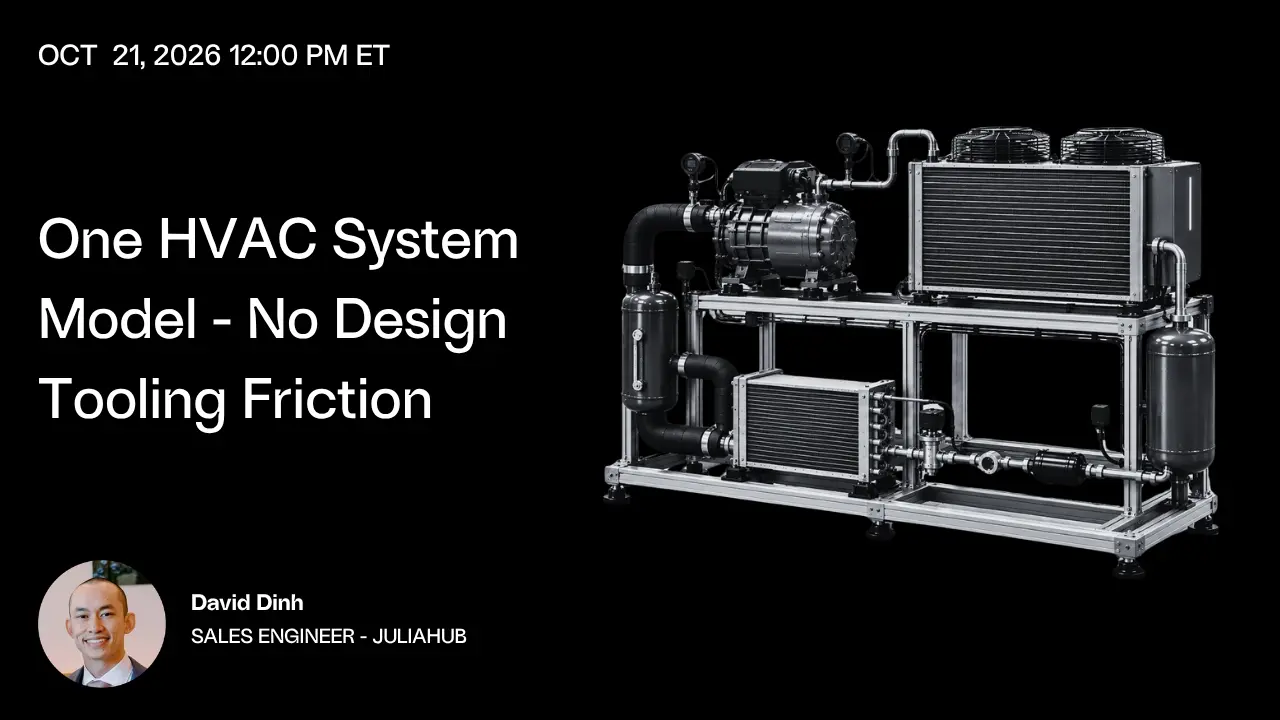
This webinar shows how Dyad avoids that split. Using HVACComponents, a Dyad-native library for vapor compression cycles, we'll assemble a complete cycle in the graphical editor from shipped components: tube-fin heat exchangers, compressors, expansion valves, fans, pipes, and conditioned spaces, all backed by fast refrigerant and moist/dry air property models. We'll run that model as a transient simulation, then solve it for steady state, using the same model definition both times.
Vapor compression shows up far beyond building HVAC. It's used in heat pumps, commercial refrigeration, EV battery and cabin thermal management, data center cooling, and aircraft environmental control. If you work in any of these areas, you'll come away knowing what the library includes, how one model covers both kinds of analysis, and where it would fit into your current workflow.