/

/

Dyad 3.2: More LLMs, Clearer Diagrams

Dyad 3.2: More LLMs, Clearer Diagrams

Dyad 3.2: More LLMs, Clearer Diagrams

Date Published

Contributors

Share

Date Published

Contributors

Share

Dyad 3.1 sharpened the agent. Dyad 3.2 broadens it. The agent now offers a larger choice of models, including OpenAI models as well as Anthropic models, and we now have the infrastructure to more easily add other models in the future. In the graphical editor, analysis points and array connectors are now visualized, making larger models easier to build and read on the canvas.

A Wider Choice of Models

GPT-5 is the first model we’re adding after initially shipping with Anthropic models. GPT-5 is now selectable in the model picker alongside Claude, with adjustable reasoning effort and a 1M-token context window, plus a 400K option for cost control. The 3.2.0 release includes GPT-5.4 and GPT-5.5, but we’ll be shipping a patch release shortly that has GPT-5.6 and Fable.
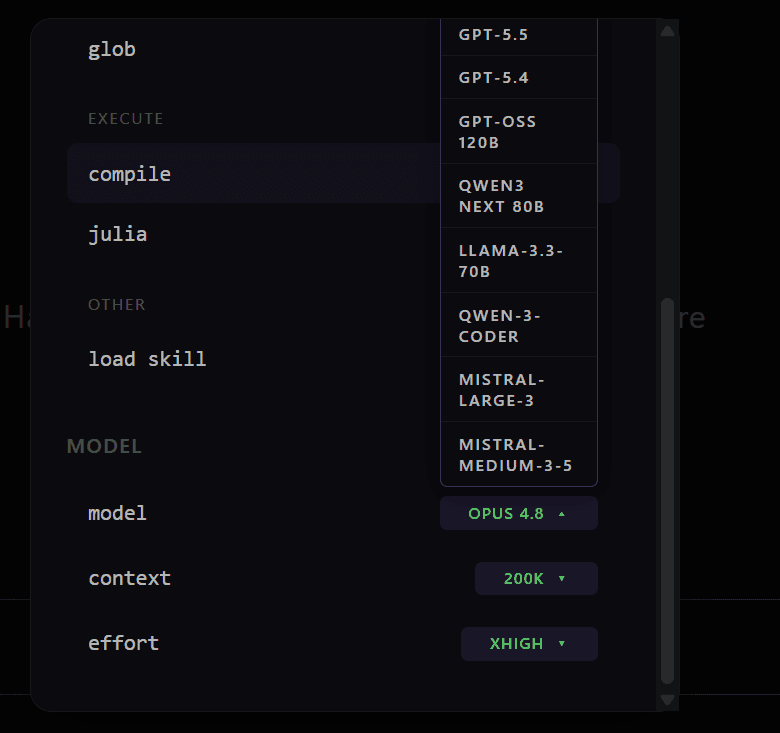
Model configuration is more predictable, too:

  • Per-model context-window defaults now come from a single source of truth, which fixes a stale context size when switching between models.

  • Model-picker labels are provider-neutral rather than tied to one model.

  • An oversized token request is capped to the model's limit with a warning, instead of failing the request outright.

A set of reliability fixes rounds this out. Switching models mid-conversation is now handled correctly, reasoning-only replies complete cleanly, and raw API errors are surfaced in an expandable panel for easier diagnosis.

A Clearer Diagram Editor

Analysis points now render on the diagram. Analysis points are annotations that analyses can reference. You can now add, rename, and delete them by right-clicking a connection in the editor, rather than only being able to add them in code.
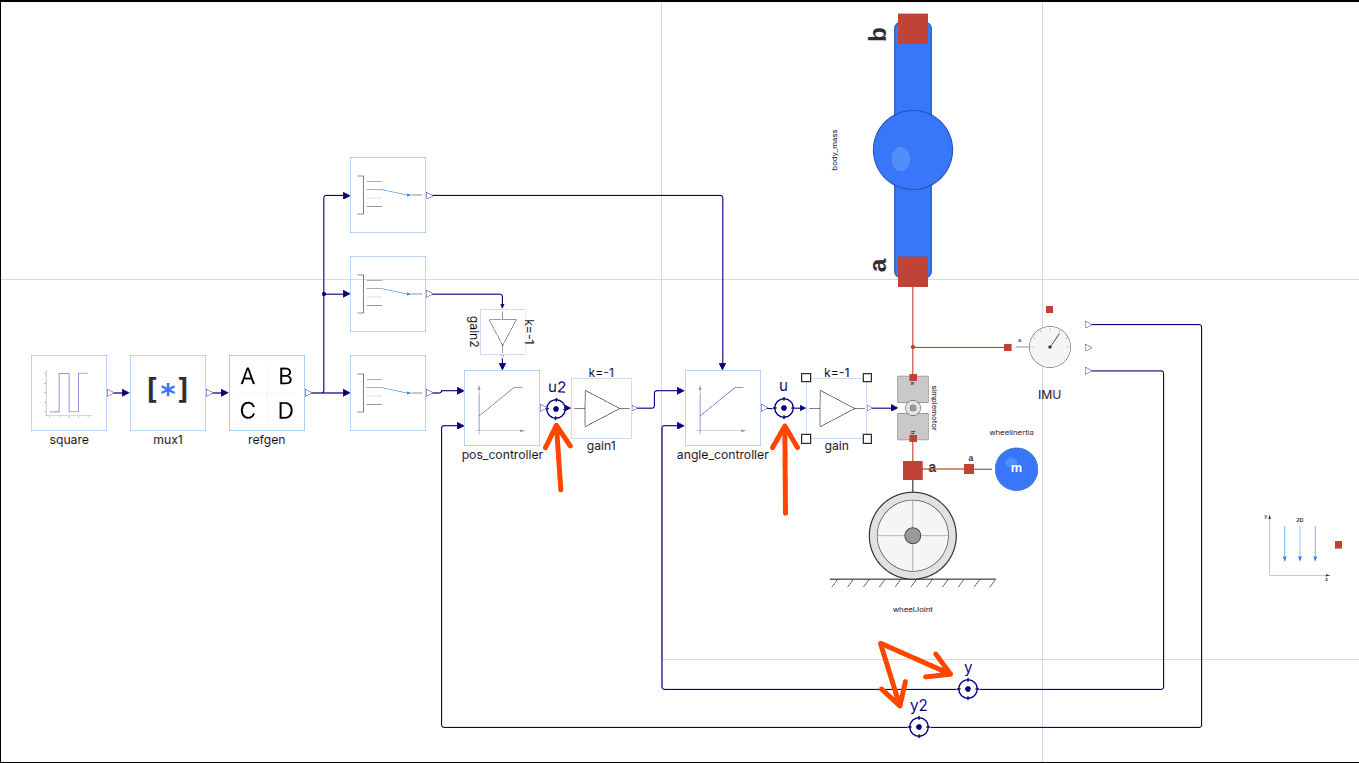
Array connectors fan out into indexed sub-connectors that can be wired individually.  Library authors are invited to use metadata to layout connectors, by defining a bounding box and how many connectors to automatically fan out (see metadata below).

Example: Mux component with fan out

component Demux
  y = [Dyad.RealOutput() for i in 1:n] {^y}
  u = MuxDemuxTests.RealInputArray(N = n) {^u}
  structural parameter n::Integer
relations
  y = u
metadata {
  "_links": {
    "y": {
      "Dyad": {
        "placement": {
          "diagram": {
            "show": 6,
            "iconName": "default",
            "x1": 1000,
            "y1": 460,
            "x2": 1080,
            "y2": 540,
            "rot": 0
          }
        },
        "tags": []
      }
    },
    "u": {
      "Dyad": {
        "placement": {
          "diagram": {"iconName": "default", "x1": -80, "y1": 100, "x2": 0, "y2": 900, "rot": 0}
        },
        "tags": []
      }
    }
  }
}
end
component Demux
  y = [Dyad.RealOutput() for i in 1:n] {^y}
  u = MuxDemuxTests.RealInputArray(N = n) {^u}
  structural parameter n::Integer
relations
  y = u
metadata {
  "_links": {
    "y": {
      "Dyad": {
        "placement": {
          "diagram": {
            "show": 6,
            "iconName": "default",
            "x1": 1000,
            "y1": 460,
            "x2": 1080,
            "y2": 540,
            "rot": 0
          }
        },
        "tags": []
      }
    },
    "u": {
      "Dyad": {
        "placement": {
          "diagram": {"iconName": "default", "x1": -80, "y1": 100, "x2": 0, "y2": 900, "rot": 0}
        },
        "tags": []
      }
    }
  }
}
end
component Demux
  y = [Dyad.RealOutput() for i in 1:n] {^y}
  u = MuxDemuxTests.RealInputArray(N = n) {^u}
  structural parameter n::Integer
relations
  y = u
metadata {
  "_links": {
    "y": {
      "Dyad": {
        "placement": {
          "diagram": {
            "show": 6,
            "iconName": "default",
            "x1": 1000,
            "y1": 460,
            "x2": 1080,
            "y2": 540,
            "rot": 0
          }
        },
        "tags": []
      }
    },
    "u": {
      "Dyad": {
        "placement": {
          "diagram": {"iconName": "default", "x1": -80, "y1": 100, "x2": 0, "y2": 900, "rot": 0}
        },
        "tags": []
      }
    }
  }
}
end

The parameter panel improvements: It now renders enum-valued parameters as dropdowns.

A few more editor fixes land here as well: entity toolbar buttons stay visible instead of disappearing, deprecation quick-fixes are offered reliably wherever a component usage is affected, and running an analysis whose solution produces no plot — an FMU solution, for example — no longer errors.

More Accurate Syntax Highlighting

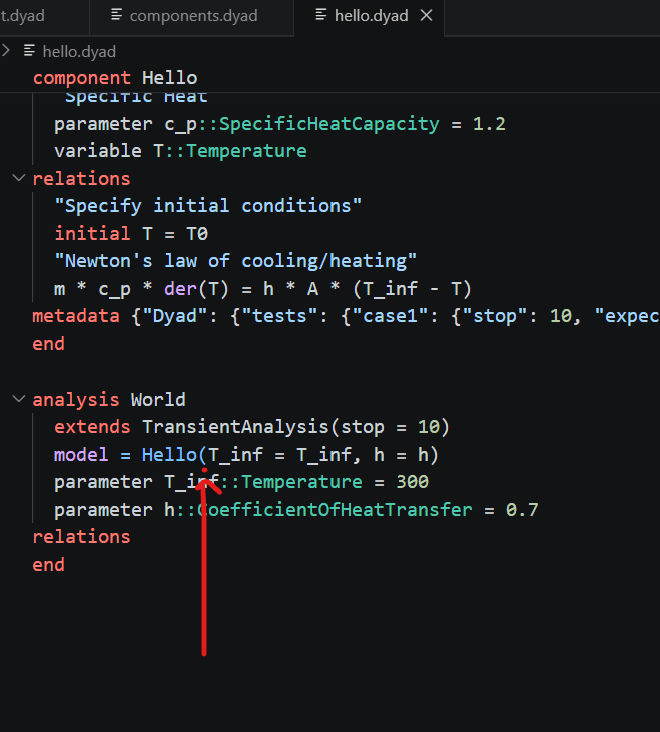
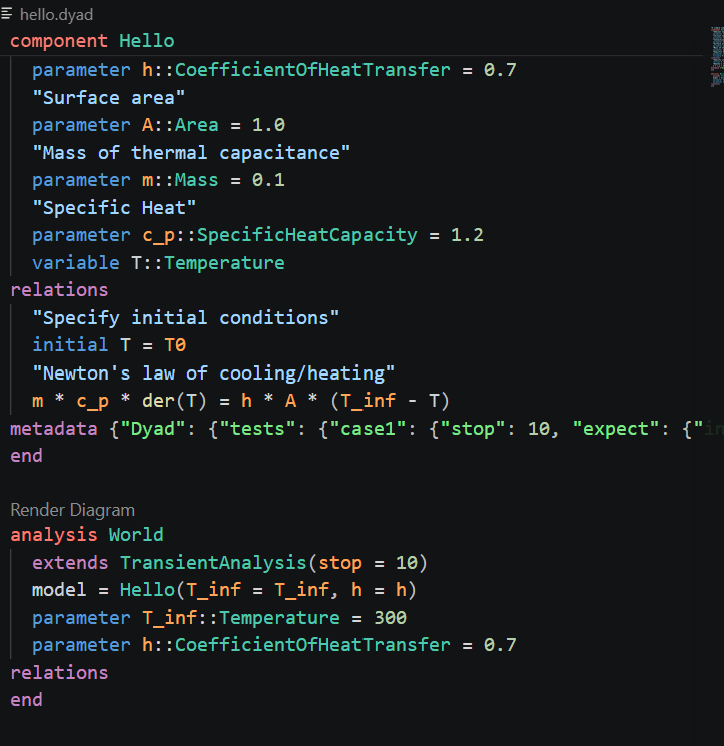
Dyad syntax highlighting is now generated directly from the language parser. Because the grammar is derived from the parser rather than maintained separately, highlighting tracks the language more closely as it evolves.

before

after


Installing and Upgrading

Existing 3.1 projects opened in 3.2 are offered a one-click migration that pins the new library versions in your Project.toml.  No manual migration is required. New installs on Windows can use the dyad-3.2.0 installer.

More models are on the way — join the Dyad Community to hear first: connect with fellow engineers, ask questions, and share ideas.


Authors

Mridul Ranjan Upadhyay is a Technical Program Manager at Julihub, where he leads technological innovation and strategic initiatives. A forward-thinking leader with a passion for emerging technologies, he holds multiple patents and is dedicated to driving results and transforming complex ideas into successful products.

Authors

Mridul Ranjan Upadhyay is a Technical Program Manager at Julihub, where he leads technological innovation and strategic initiatives. A forward-thinking leader with a passion for emerging technologies, he holds multiple patents and is dedicated to driving results and transforming complex ideas into successful products.

Authors

Mridul Ranjan Upadhyay is a Technical Program Manager at Julihub, where he leads technological innovation and strategic initiatives. A forward-thinking leader with a passion for emerging technologies, he holds multiple patents and is dedicated to driving results and transforming complex ideas into successful products.

Learn about Dyad

Get Dyad Studio – Download and install the IDE to start building hardware like software.

Read the Dyad Documentation – Dive into the language, tools, and workflow.

Join the Dyad Community – Connect with fellow engineers, ask questions, and share ideas.

Contact Us

Want to get enterprise support, schedule a demo, or learn about how we can help build a custom solution? We are here to help.