/

/

Coming Soon Dyad v2.0.0 with Powerful Agentic AI

/

/

Coming Soon Dyad v2.0.0 with Powerful Agentic AI

Coming Soon Dyad v2.0.0 with Powerful Agentic AI

Coming Soon Dyad v2.0.0 with Powerful Agentic AI

Date Published

Dec 10, 2025

Dec 10, 2025

Contributors

Share

Share

Date Published

Dec 10, 2025

Contributors

Share

The Dyad Dispatch

A monthly roundup of Dyad news for the Modeling & Simulation community 

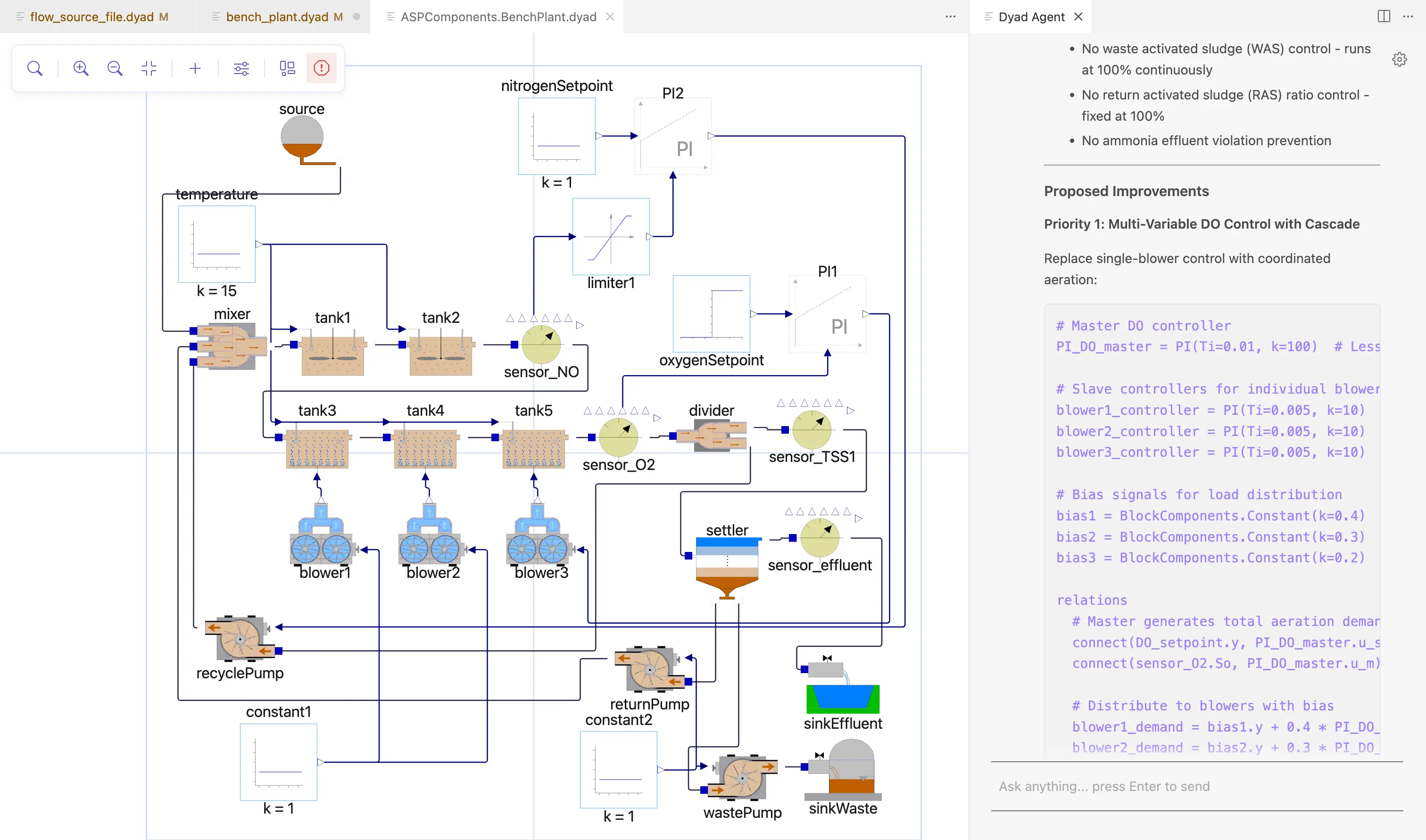
Upcoming: Dyad v2.0.0

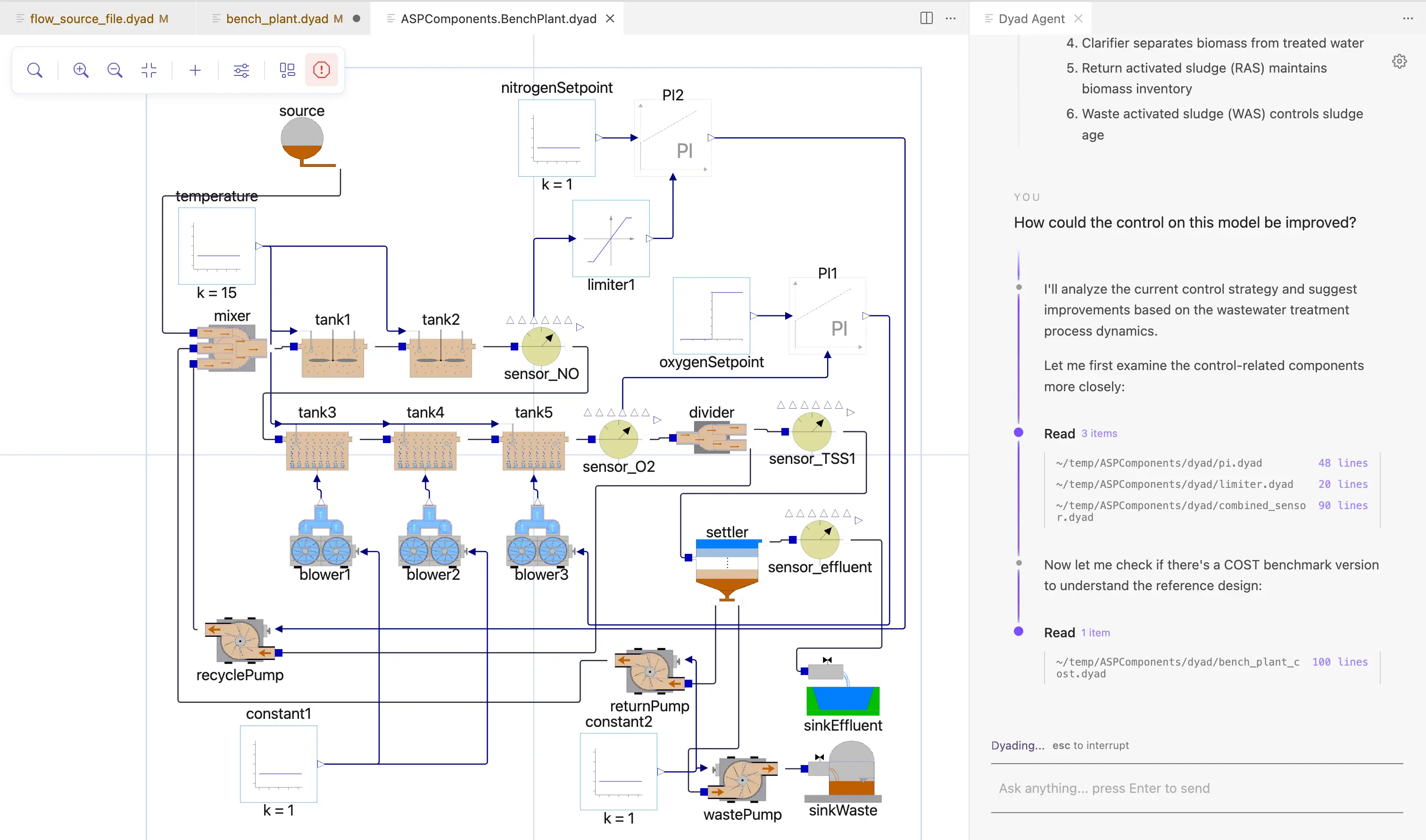
JuliaHub is excited to announce Dyad v2.0.0,  a major step forward in AI-assisted modeling. The new release unifies agentic AI with simulation, enabling agents to reason, test, and refine designs autonomously. Instead of manual trial-and-error, engineers get validated results faster and with greater confidence. Dyad v2.0.0 also introduces a graphical interface, making exploratory modeling and complex workflows more intuitive and scalable.
JuliaHub Partners with Synopsys to Accelerate SciML-Based Digital Twins

We’re excited to announce a strategic partnership with Synopsys, integrating Dyad, the next-generation simulation platform into Ansys Twin AI, Synopsys AI-powered digital-twin software. This partnership will empower engineers to build hybrid digital twins that combine physics-based simulation with adaptive AI models, making them  predictive, explainable, and deeply rooted in physical laws. 

Read the full press release

Join Dyad Modeling Live

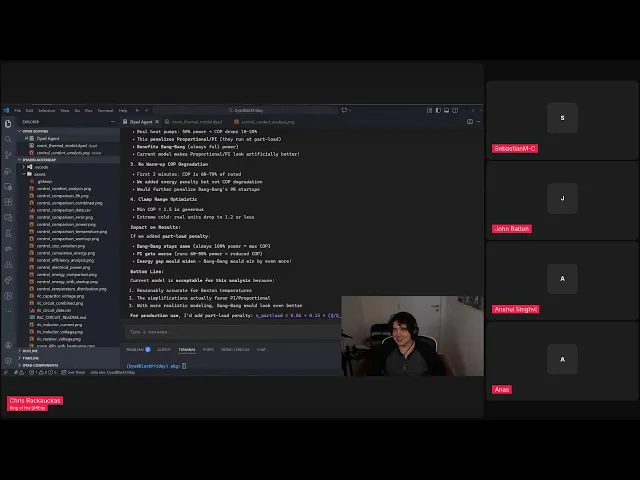
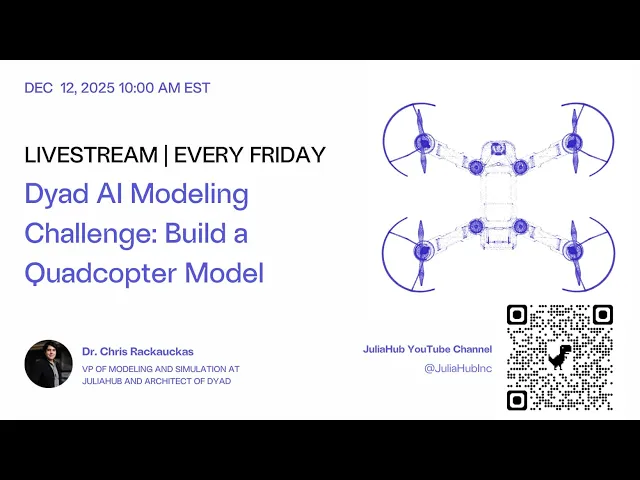
Build models live with Chris Rackauckas using Dyad and Agentic AI.
Follow Chris on social media to get notified when the next interactive session begins, watch, ask questions, or even model alongside him.

Watch our recent live-stream:

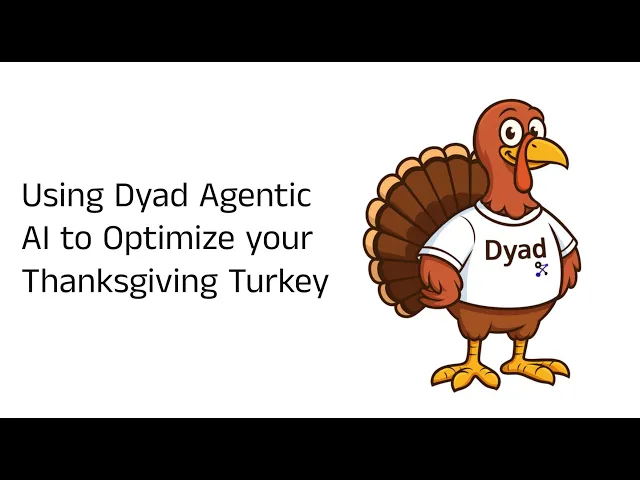
Cooking a Turkey With Agentic AI

A Thanksgiving Experiment With Dyad
Yes, we modeled the thermal profile of a turkey using Dyad’s agentic workflow. A discretized heat model, multiple cooking conditions, and a fully animated result because scientific modeling should be fun and powerful.

Watch the video:
Uncovering Missing Physics with Dyad Model Discovery

Most systems hide unknown dynamics. Dyad’s Model Discovery library uses universal differential equations to identify friction terms, actuator delays, thermal–electrical couplings, and more, automatically surfacing the physics you didn’t know you needed.

Read more

Webinar: Causal vs. Acausal Modeling: Choosing the Right Approach: Dec 17, 2025, 1:00 PM EDT

How you model a system shapes how you understand it. Causal modeling works well for simple signal flows, but it becomes rigid as systems grow. Acausal modeling scales by defining physical relationships and letting the equations derive themselves.

In our upcoming webinar, we’ll compare both approaches using electrical examples—from RC to RLC circuits, and show how Dyad (built on Julia + SciML) makes acausal modeling fast, flexible, and practical for real-world engineering.

Register here

Authors

JuliaHub, formerly Julia Computing, was founded in 2015 by the four co-creators of Julia (Dr. Viral Shah, Prof. Alan Edelman, Dr. Jeff Bezanson and Stefan Karpinski) together with Deepak Vinchhi and Keno Fischer. Julia is the fastest and easiest high productivity language for scientific computing. Julia is used by over 10,000 companies and over 1,500 universities. Julia’s creators won the prestigious James H. Wilkinson Prize for Numerical Software and the Sidney Fernbach Award.

Authors

JuliaHub, formerly Julia Computing, was founded in 2015 by the four co-creators of Julia (Dr. Viral Shah, Prof. Alan Edelman, Dr. Jeff Bezanson and Stefan Karpinski) together with Deepak Vinchhi and Keno Fischer. Julia is the fastest and easiest high productivity language for scientific computing. Julia is used by over 10,000 companies and over 1,500 universities. Julia’s creators won the prestigious James H. Wilkinson Prize for Numerical Software and the Sidney Fernbach Award.

Authors

JuliaHub, formerly Julia Computing, was founded in 2015 by the four co-creators of Julia (Dr. Viral Shah, Prof. Alan Edelman, Dr. Jeff Bezanson and Stefan Karpinski) together with Deepak Vinchhi and Keno Fischer. Julia is the fastest and easiest high productivity language for scientific computing. Julia is used by over 10,000 companies and over 1,500 universities. Julia’s creators won the prestigious James H. Wilkinson Prize for Numerical Software and the Sidney Fernbach Award.

Learn about Dyad

Get Dyad Studio – Download and install the IDE to start building hardware like software.

Read the Dyad Documentation – Dive into the language, tools, and workflow.

Join the Dyad Community – Connect with fellow engineers, ask questions, and share ideas.

Learn about Dyad

Get Dyad Studio – Download and install the IDE to start building hardware like software.

Read the Dyad Documentation – Dive into the language, tools, and workflow.

Join the Dyad Community – Connect with fellow engineers, ask questions, and share ideas.

Contact Us

Want to get enterprise support, schedule a demo, or learn about how we can help build a custom solution? We are here to help.

Contact Us

Want to get enterprise support, schedule a demo, or learn about how we can help build a custom solution? We are here to help.